

The Grand-Place
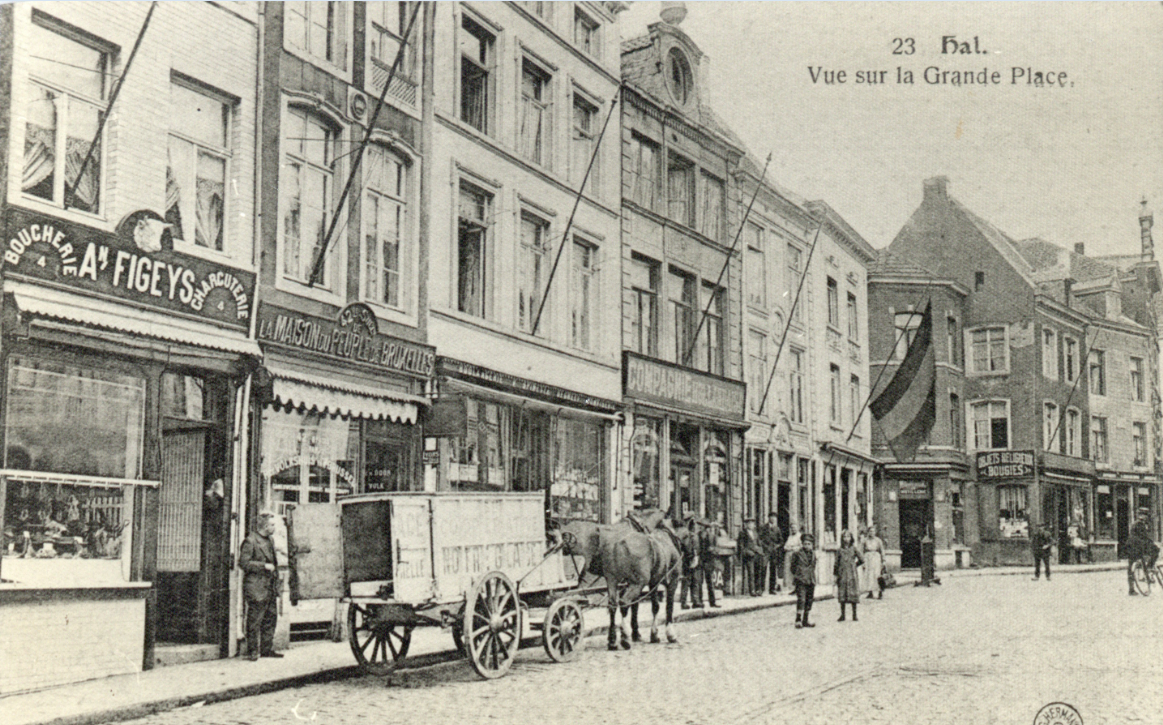
Many houses on the Grand-Place were destroyed during the French war policies of Louis XIV between 1680 and 1740. Three buildings are protected as monuments. To the left of the town hall stands “the Elephant”, in rococo or Louis XV style. Across from it are two buildings in the classicist or Louis XVI style, with facades made of blue stone. The year on various facades reveals the year of construction. The oldest mention is from 1404. The red brick facades were erected from 1880 with elements from classical art forms - the neo or eclectic styles.
Historic City Hall
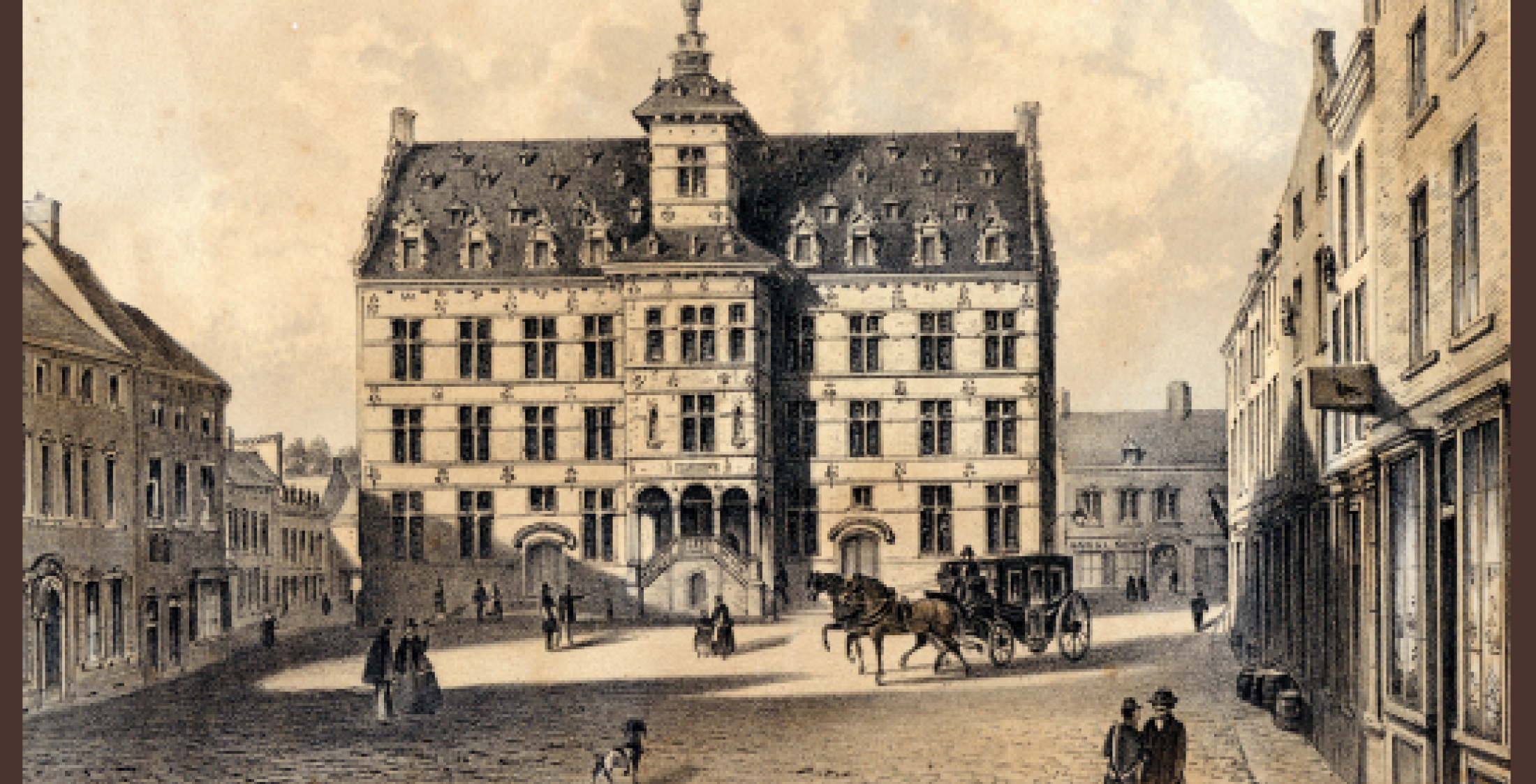
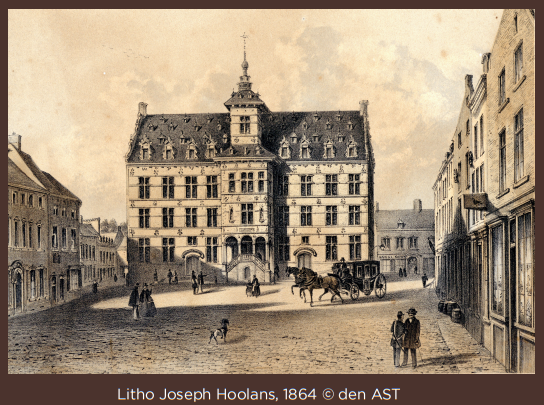
The earliest mention of a city hall dates back to 1432. It was destroyed in 1595 and rebuilt between 1608 and 1616 in Flemish Renaissance style, an elegant blend of Gothic, Renaissance, and Baroque elements. Around 1850, it underwent restoration and partial remodeling.
The city hall was once the centerpiece of a complex of buildings, including a hotel (Het Schild van Bourgondië) at the back, a grain market, a covered slaughterhouse with about twenty butchers, a brewery, a café, and a fish market. These buildings were demolished in 1860. The city hall has been a protected monument since 1933. In 1994, the city administration moved to the Oudstrijdersplein, and since then, the city hall has only had a ceremonial function.
On the right side of the facade, there is a plaque commemorating the writer Hendrik Conscience, who enjoyed staying in Halle. At the front, you can see the city of Halle's coat of arms and two statues by Cyprien Godebski, “The Truth” and “Justice”.
Statue of Servais
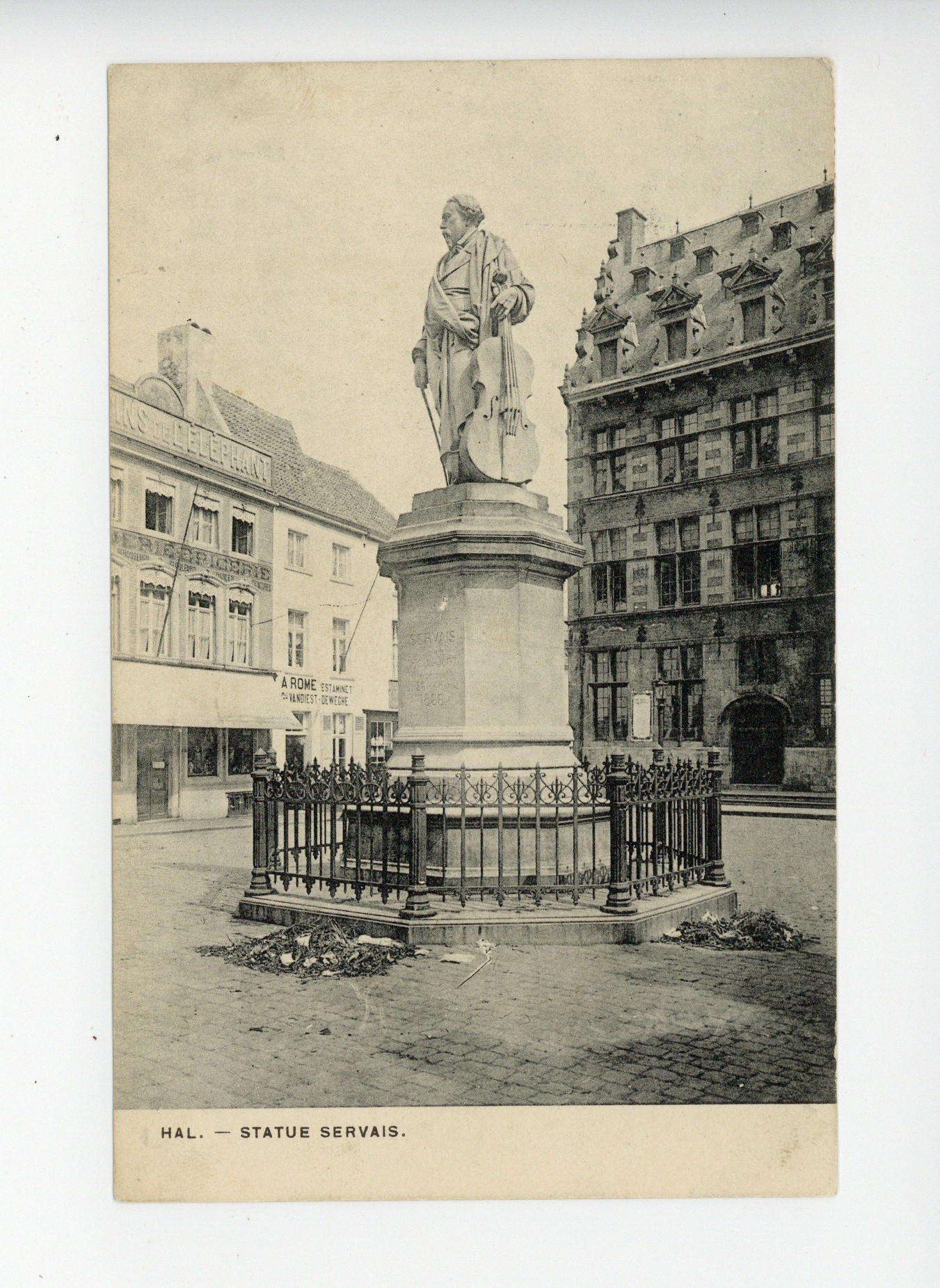
François Servais (1807-1866) is the most famous figure from Halle. As a cello virtuoso, he achieved success throughout Europe. His compositions are still played worldwide today. Servais resided in Villa Servais near the train station. The statue, made of Carrara marble, was created by Servais' son-in-law, Cyprien Godebski, and inaugurated in 1871.
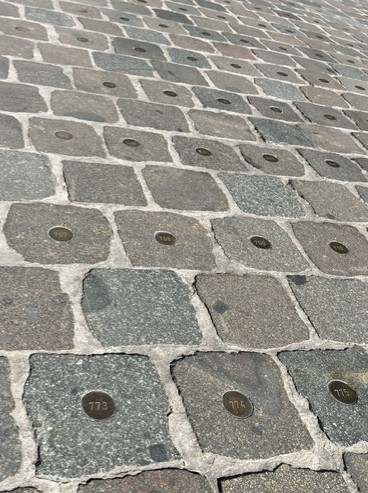
Numbered cobblestones
When the Grote Markt was renovated in 1997, the local service clubs joined forces for the ‘Do your bit’ campaign. Residents and supporters were then able to symbolically ‘adopt’ one of the 2,500 numbered cobblestones for 1,000 Belgian francs each.
The proceeds from this successful sale went directly to the restoration fund. Among other things, the triumphal cross in the basilica and the statue of Adrien François Servais were restored using these funds.
The numbers are still visible on the market square today as a lasting reminder of the generous donors.